 Day Tours from Tokyo
Free Day Trips from Tokyo by Train and Bus
Free day trips from Tokyo mean going on your own with a normal train or highway bus ticket, no tour fee, and paying only for what you actually enter. This page covers the easy trips a single day allows: Kamakura, Enoshima, Yokohama, Kawagoe and Mount Takao first, then the longer rides to Kawaguchiko, Hakone and Nikko. You get the station to start from, the fare, the journey time, the pass that covers the local trains and what costs nothing once you arrive. If you would rather let someone else handle the driving, the day trips from Tokyo on the homepage compare booked tours with the same routes. Multi-day versions sit on the 2 day trip from Tokyo and 3 day trip from Tokyo pages.
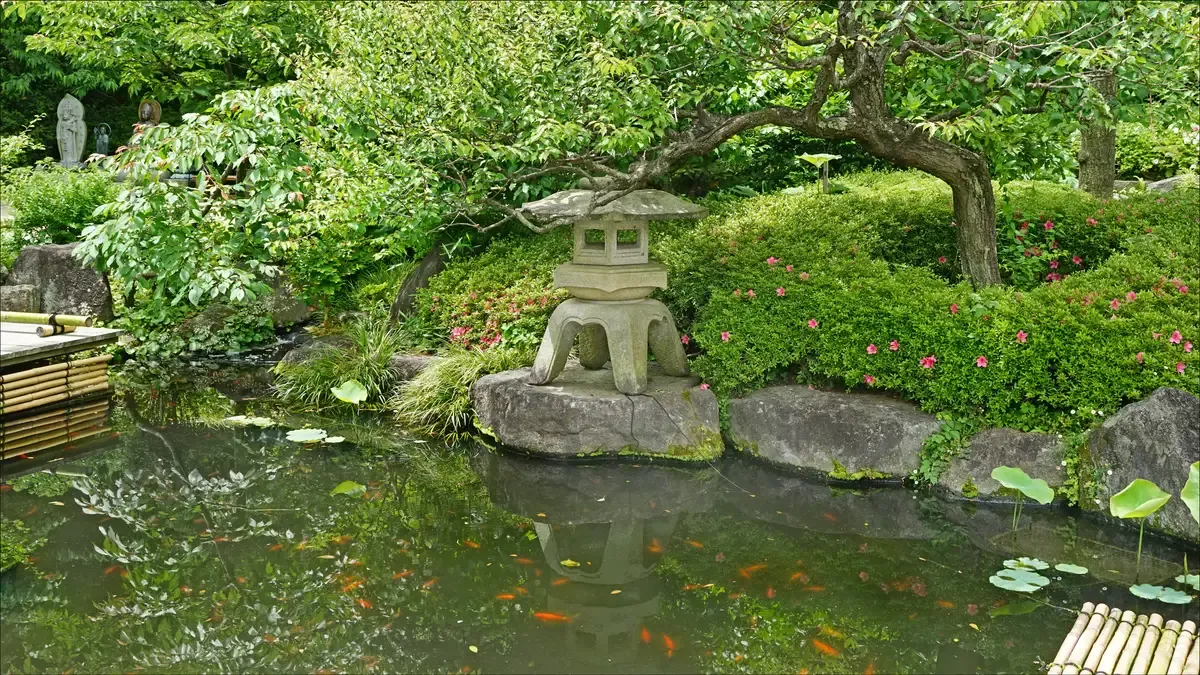
The garden pond at Hasedera in Kamakura holds koi beside a stone lantern. Photo: Jean-Pierre Dalbéra from Paris, France, CC BY 2.0, via Wikimedia Commons
Quick answer The short answer
Kamakura is just under an hour on the JR Yokosuka Line from Tokyo Station for 1,040 yen, Kawagoe is 30 minutes from Ikebukuro on the Tobu Tojo Line for 490 yen, and Mount Takao is about 50 minutes from Shinjuku on the Keio Line for 430 yen. None of these needs a booked tour. You tap in with Suica or PASMO, ride the line, and pay separate admission only where a site charges one. The shrine grounds, the town streets and the mountain trails cost nothing.
Key takeaways
- See how the tickets and passes work in How a Free Day Trip from Tokyo Works.
- Pick from the easy trips under an hour in Under an Hour.
- Follow the full Kamakura route in Kamakura and Enoshima Without a Tour, Step by Step.
- For stations, luggage, Suica and weather basics, read how to plan a day trip from Tokyo.
How a Free Day Trip from Tokyo Works
Going without a tour costs only the transport fare plus any entrance fee you choose to pay. Two rules cover almost every case.
The Ticket Rule
An IC card like Suica or PASMO pays the base fare across JR and private lines, and the cards work across each other's networks. On a limited express the IC card covers only the base fare and you buy the seat supplement separately. Day passes replace all that where several rides are involved: the Enoshima-Kamakura Freepass is 1,640 yen for one day from Shinjuku, the 2-day Hakone Freepass is 7,100 yen from Shinjuku, the NIKKO PASS World Heritage Area is 3,000 yen, and the Kawagoe Discount Pass is 710 yen round trip from Ikebukuro. Choose a pass when the rides inside it cost more than the pass, and an IC card when you make only one round trip.
On JR East shinkansen an IC card works only for non-reserved seats after a one-time set-up, and many highway buses do not take IC cards at all, so carry some cash. The planning guide covers Suica and luggage in detail.
Which Tokyo Station You Leave From
The start point depends on the destination, not on what is closest to your hotel. The table below lists the stations the official route pages name and where each one goes. Shinjuku alone covers three different lines, so check which company runs the service before you go there.
| Tokyo station | Goes to | Line |
|---|---|---|
| Tokyo Station | Kamakura (Yokosuka Line), Kawaguchiko bus (about 2 hours, 2,300 yen), Yokohama (20 to 30 minutes) | JR and highway bus |
| Shinjuku | Kamakura (JR Shonan-Shinjuku, about 1 hour), Hakone (Odakyu Romancecar, about 80 minutes), Kawaguchiko (JR Chuo to Otsuki, then Fujikyu Railway, 70 plus 55 minutes), Mount Takao (Keio, about 50 minutes) | Odakyu, Keio, JR |
| Busta Shinjuku | Kawaguchiko (about 1 hour 45 minutes, from 2,200 yen) | Fujikyu highway bus |
| Asakusa | Nikko (Tobu limited express, about 2 hours, 2,850 to 3,540 yen) | Tobu |
| Ikebukuro | Kawagoe (Tobu Tojo express, 30 minutes, 490 yen), Chichibu (Seibu) | Tobu Tojo, Seibu |
| Shibuya | Kawaguchiko bus (2 to 2.5 hours, 2,300 yen), Yokohama via Tokyu Toyoko toward Minatomirai and Motomachi-Chukagai | Tokyu Toyoko and highway bus |
What Free Means Here
Free covers the places that charge no admission at all: shrine grounds such as Tsurugaoka Hachimangu (open 6:00 to 20:00), Chureito Pagoda, Nara Park, the Kawagoe warehouse district streets, the Mount Takao trails and the Takao 599 Museum. What is paid is clearly marked on each site. Kotoku-in charges 300 yen for the Great Buddha, Toshogu in Nikko charges 1,600 yen, and the Hakone Ropeway costs 2,000 yen one way.
A day can mix the two, a free walk and one or two paid stops.
Sources: Fujikyu highway buses, Odakyu passes
Under an Hour: Kamakura, Enoshima, Yokohama, Kawagoe, Mount Takao
These trips all fit in a normal day with no long transfer and no advance reservation. The table gives the ride, then each block gives the route on the ground.
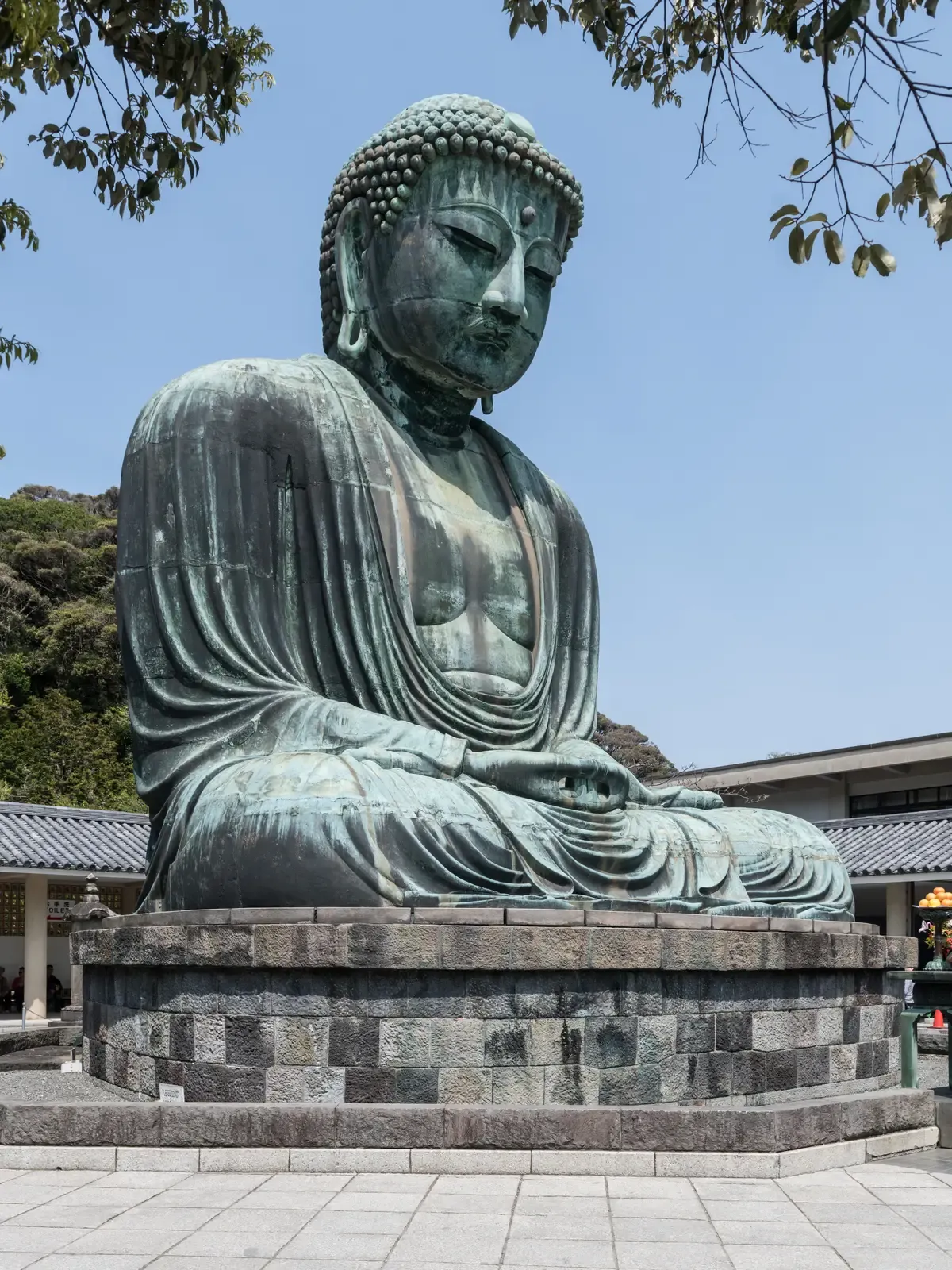
The Great Buddha of Kotoku-in sits in the open air, a short walk from Hase Station on the Enoden. Photo: DXR, CC BY-SA 4.0, via Wikimedia Commons
Kamakura and Enoshima
The JR Yokosuka Line reaches Kamakura from Tokyo Station in just under an hour for 1,040 yen, and the JR Shonan-Shinjuku Line from Shinjuku takes about one hour at the same fare. Only Shonan-Shinjuku trains bound for Zushi run through to Kamakura, about two per hour, and other trains need a change at Ofuna. From Shinjuku the Odakyu route to Enoshima takes 65 to 75 minutes with a change at Fujisawa for 650 yen.
Enoshima itself pairs with Kamakura on the Enoden, a 25-minute coastal ride for 260 yen with trains about every ten minutes. Free in town: the Tsurugaoka Hachimangu grounds. Paid: Kotoku-in at 300 yen and Hasedera at 400 yen.
Start early, because Kotoku-in stops entry 15 minutes before its 17:00 or 17:30 close. The full walk-through is further down this page.
| Place | From | Time | Fare | What is free |
|---|---|---|---|---|
| Kamakura | Tokyo Station, JR Yokosuka Line | just under 1 hour | 1,040 yen | Tsurugaoka Hachimangu grounds |
| Enoshima | Shinjuku, Odakyu with change at Fujisawa | 65 to 75 minutes | 650 yen | Beach walk, bridge to the island |
| Yokohama | Tokyo, Shinagawa, Shibuya or Shinjuku | 20 to 30 minutes | varies by line | Minato Mirai waterfront and Chinatown streets |
| Kawagoe | Ikebukuro, Tobu Tojo express | 30 minutes | 490 yen | Warehouse district streets, Toki no Kane chimes at 6:00, 12:00, 15:00 and 18:00 |
| Mount Takao | Shinjuku, Keio limited express | about 50 minutes | 430 yen | All six trails, the 599 m summit, Takao 599 Museum |
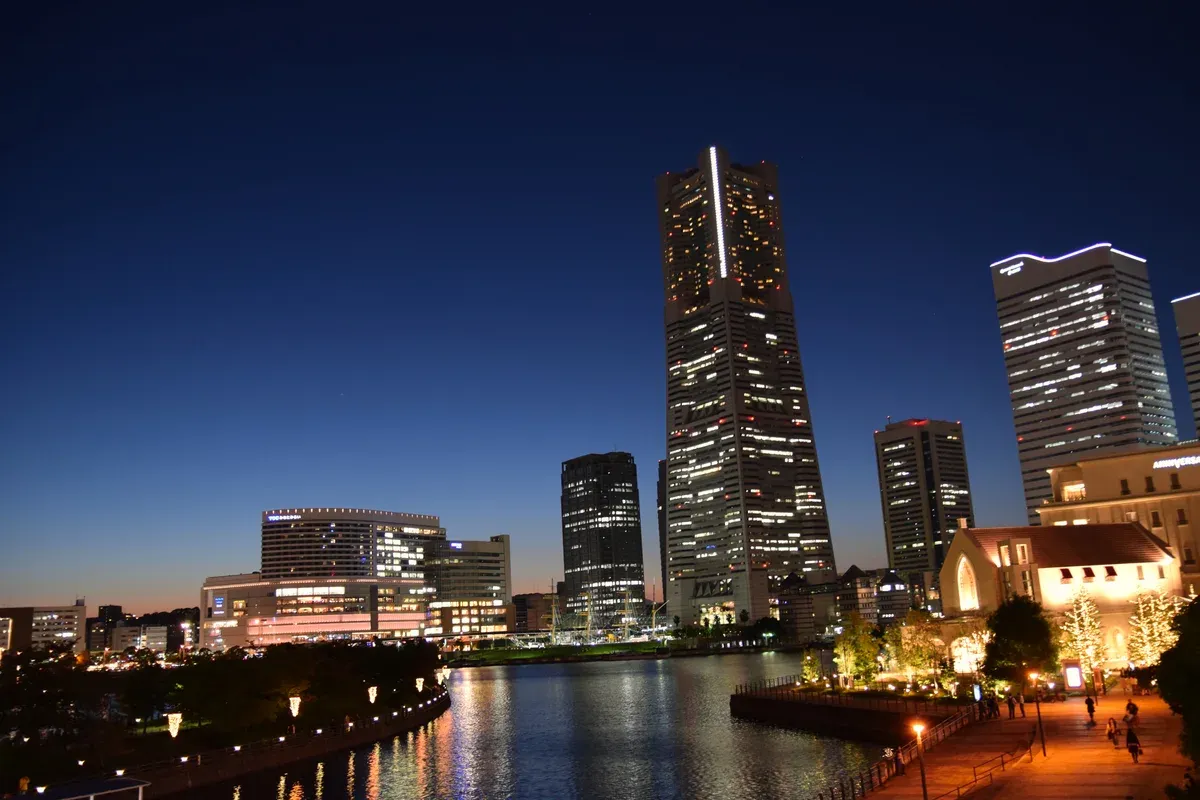
Minato Mirai is the waterfront district on the Minatomirai Line. Photo: Raita Futo from Tokyo, Japan, CC BY 2.0, via Wikimedia Commons
Yokohama
Yokohama sits 20 to 30 minutes from Tokyo Station, Shinagawa, Shibuya and Shinjuku. The fare depends on the line you take. Once there, the walk along the Minato Mirai waterfront costs nothing, and the Chinatown streets are free to browse, with Motomachi-Chukagai station 8 minutes and 230 yen from Yokohama Station and Ishikawacho 7 minutes and 200 yen.
Tokyu Toyoko Line trains from Shibuya continue onto the Minatomirai Line toward Minatomirai and Motomachi-Chukagai, so one seat can carry you most of the way. For a paid stop, the CupNoodles Museum Yokohama costs 500 yen for adults and is free for high school age and younger, open 10:00 to 18:00 with last admission at 17:00, closed Tuesdays and over New Year. Sankeien Garden charges 900 yen, open 9:00 to 17:00 with entry until 16:30, reached by bus 8 or 148 from Yokohama Station in 30 to 35 minutes for 220 yen.
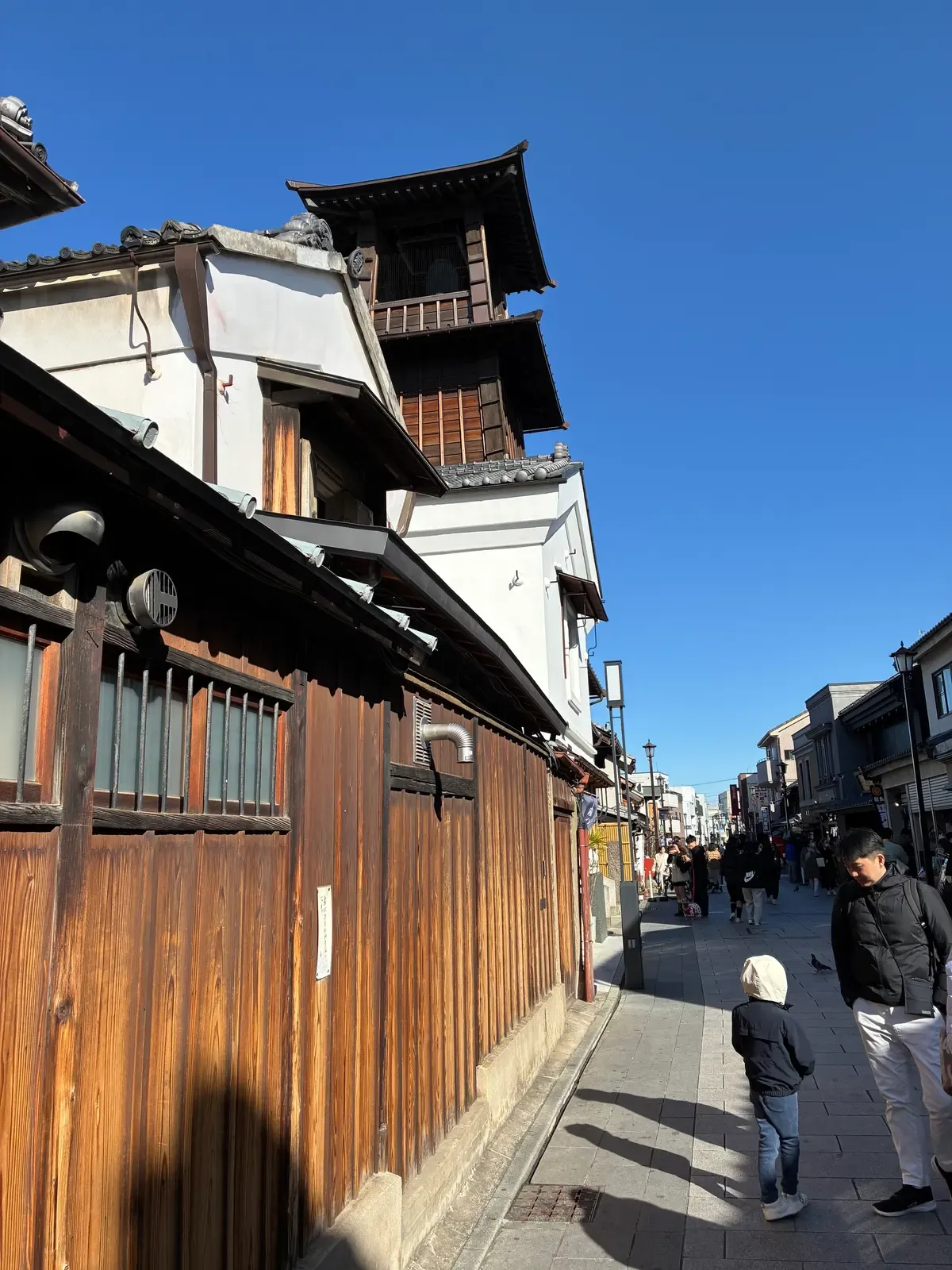
The Toki no Kane bell tower rises over the warehouse district of Kawagoe. Photo: Lin Xiangru, CC BY-SA 4.0, via Wikimedia Commons
Kawagoe
The Tobu Tojo express from Ikebukuro reaches Kawagoe in 30 minutes for 490 yen, the fastest way in. From Seibu-Shinjuku the Seibu express takes 50 to 60 minutes for 600 yen, or about 45 minutes by limited express for 1,200 yen, and the JR Saikyo and Kawagoe Line from Shinjuku takes 55 minutes for 810 yen. Foreign tourists can use the Tobu Kawagoe Discount Pass at 710 yen round trip from Ikebukuro, or the Premium version with bus rides at 1,050 yen.
The warehouse district is a 10 to 15 minute walk from Hon-Kawagoe Station, and the old streets cost nothing to walk. The Toki no Kane bell tower chimes four times a day at 6:00, 12:00, 15:00 and 18:00, so time your stroll to one of them. Kashiya Yokocho, the candy alley, is a 15 to 20 minute walk from Hon-Kawagoe near the festival museum.
Kitain temple charges 400 yen and opens 9:00 to 16:30, until 16:00 in winter. The Koedo Loop Bus day pass is 400 yen if the walking adds up.
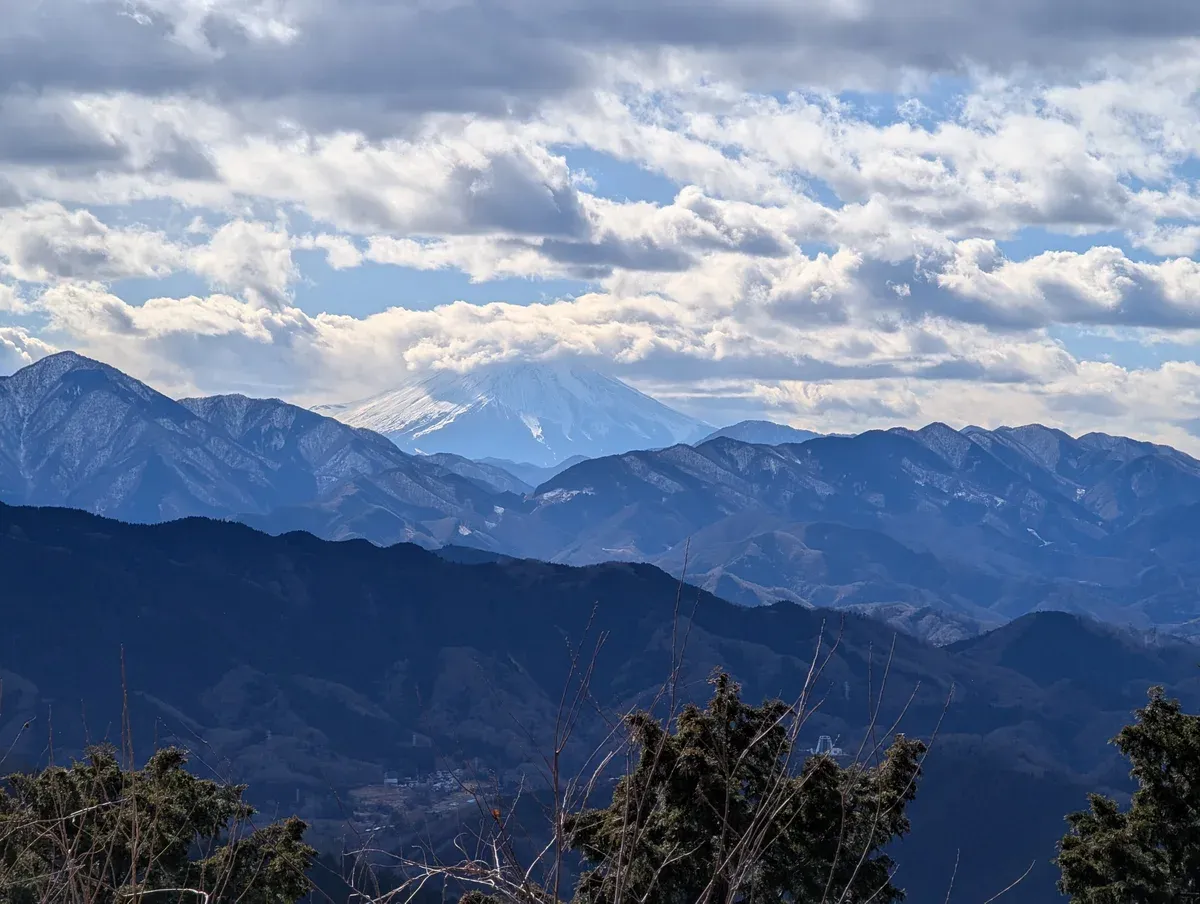
On a clear winter day Mt Fuji shows from the summit of Mount Takao. Photo: Syced, CC0, via Wikimedia Commons
Mount Takao
Keio limited express trains leave Shinjuku about every 20 minutes and reach Takaosanguchi in about 50 minutes for 430 yen, the cheapest ride of the five. The mountain is 599 m high with six numbered trails, and the trails themselves are free. Trail 1 (Omotesando) is 3.8 km and takes 110 minutes up and 90 down on foot, or 60 up and 50 down using the cable car or chair lift, which both cost 490 yen one way.
The cable car runs every 15 minutes with 135 passengers per car on Japan's steepest slope of 31.18 degrees. Hours: the chair lift runs 9:00 to 16:30 and the cable car 8:00 to 18:00 in April, May, July and August. The summit shows Mt Fuji on clear days, and an observation deck near the cable car top station overlooks Tokyo.
Yakuoin temple near the summit is where visitors pray to tengu mountain gods. The Takao 599 Museum, 4 minutes on foot from Takaosanguchi, is free and opens 8:00 to 17:00 from April to November and 8:00 to 16:00 from December to March. Weekends get crowded, especially in November.
How to Get from TOKYO to MT. FUJI, Kawaguchiko 5 Lakes, by Bus or Train
The bus and train routes to Kawaguchiko step by step. Third-party video by Kensho Quest. This site did not shoot it and has no relationship with the creator.
Kamakura and Enoshima Without a Tour, Step by Step
This is the most searched do-it-yourself trip from Tokyo, and it works in one line out and one coastal line back. Here is the order that keeps the walking flat and the queues short.
Getting There: Two Routes
From Tokyo Station take the JR Yokosuka Line, just under an hour for 1,040 yen, straight to Kamakura Station. From Shinjuku the JR Shonan-Shinjuku Line takes about one hour at the same 1,040 yen, but only trains bound for Zushi run through, about two per hour, so other departures mean a change at Ofuna. The Odakyu option reverses the geography: the Enoshima-Kamakura Freepass from Shinjuku costs 1,640 yen for adults and 430 yen for children for one day, covers one Odakyu round trip Shinjuku-Fujisawa, unlimited Enoden rides on the whole Fujisawa-Kamakura line and unlimited Odakyu rides between Fujisawa and Enoshima.
Use the Freepass when Enoden rides and the island both feature in your day, since the Enoden alone is 260 yen each way.
Morning: The Great Buddha and Hasedera
Start at Kotoku-in, the Great Buddha, before the crowds build. Admission is 300 yen for adults and 150 yen for children aged 6 to 12, with children under 6 free. Opening is 8:00 to 17:30 from April to September and 8:00 to 17:00 from October to March, and entry stops 15 minutes before closing. Going inside the statue costs an extra 50 yen and runs 8:00 to 16:30 all year, entry until 10 minutes before closing, so that part has its own earlier cutoff.
Hasedera is a five-minute walk from Hase Station on the Enoden. It charges 400 yen for adults and 200 yen for elementary school children. Admission runs 8:00 to 16:30 with closing at 17:00, and from April to June 8:00 to 17:00 with closing at 17:30. The two temples sit close enough to visit in one morning, and the Noriorikun Enoden day pass at 800 yen for adults gives a discount at Hasedera as well as at the Enoshima Sea Candle and the Enoshima Aquarium.
Afternoon: The Enoden to Enoshima and Back to Kamakura
The Enoden from Kamakura to Enoshima takes 25 minutes for 260 yen, with trains about every ten minutes. Cross the bridge and the island's seafront walk is free. The paid set on the island is a 1,100 yen combined ticket for the garden, observation tower, caves and escalators, and the Iwaya Caves alone cost 500 yen. Odakyu also sells an Enoshima Sky View Ticket at 1,100 yen.
Ride the Enoden back to Kamakura for the late afternoon. Tsurugaoka Hachimangu is open 6:00 to 20:00 and is a 10 to 15 minute walk from Kamakura Station, and the shrine grounds cost nothing. The treasure hall inside is open 9:00 to 16:00 for 200 yen, and the Shinen peony garden, which opens only in spring and winter, costs 500 yen. If you started the day at Enoshima instead, Odakyu reaches Katase-Enoshima from Shinjuku in 65 to 75 minutes for 650 yen, or the Romancecar runs directly in 60 minutes every one or two hours on weekends and holidays for 1,400 yen total, 1,350 yen as an e-ticket. Engakuji in Kita-Kamakura charges 500 yen with admission ending 30 minutes before closing.
If You Would Rather Not Plan It
A booked coach removes the timetable work. The Kamakura and Enoshima day tour at $78 adds a guide, the driver and the Enoden ride over 10 hours, with the meeting point at Tokyo Station or Shinjuku depending on the option. Be clear on what the price does not cover: the Great Buddha admission of 300 yen is paid separately, and lunch, drinks and personal purchases are not included either.
For a bigger swing, the tour that pairs Kamakura's Big Buddha with Mt Fuji and Lake Ashi costs $59.50, though again the Big Buddha ticket and the Lake Ashi cruise are only in the Full Tour options, not the Basic one.
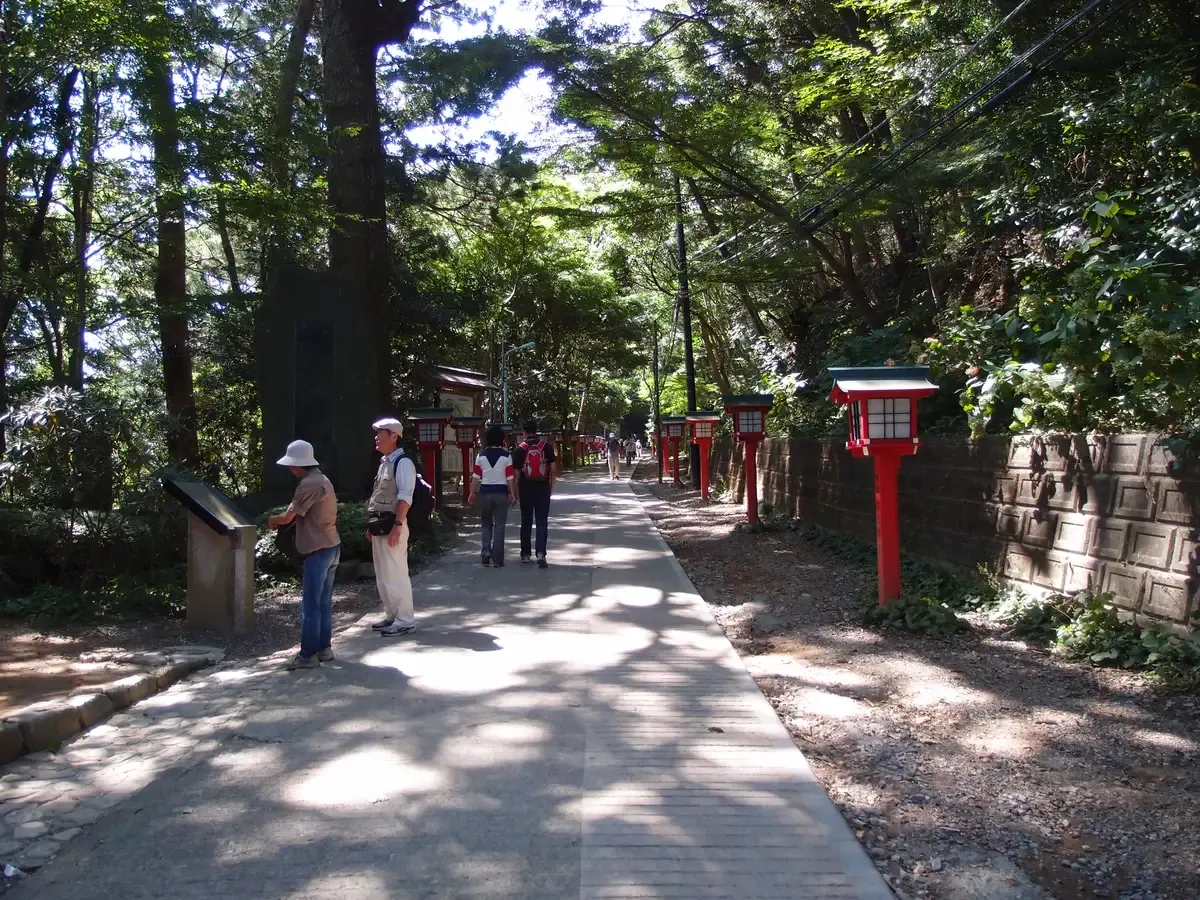
Red lanterns line the path to Yakuo-in temple on Mount Takao. Photo: Guilhem Vellut from Annecy, France, CC BY 2.0, via Wikimedia Commons
Further Out on Your Own: Hakone, Kawaguchiko, Nikko
These three are easy day trips from Tokyo without a tour, but each takes about two hours each way, so start early and pick your pass with care.
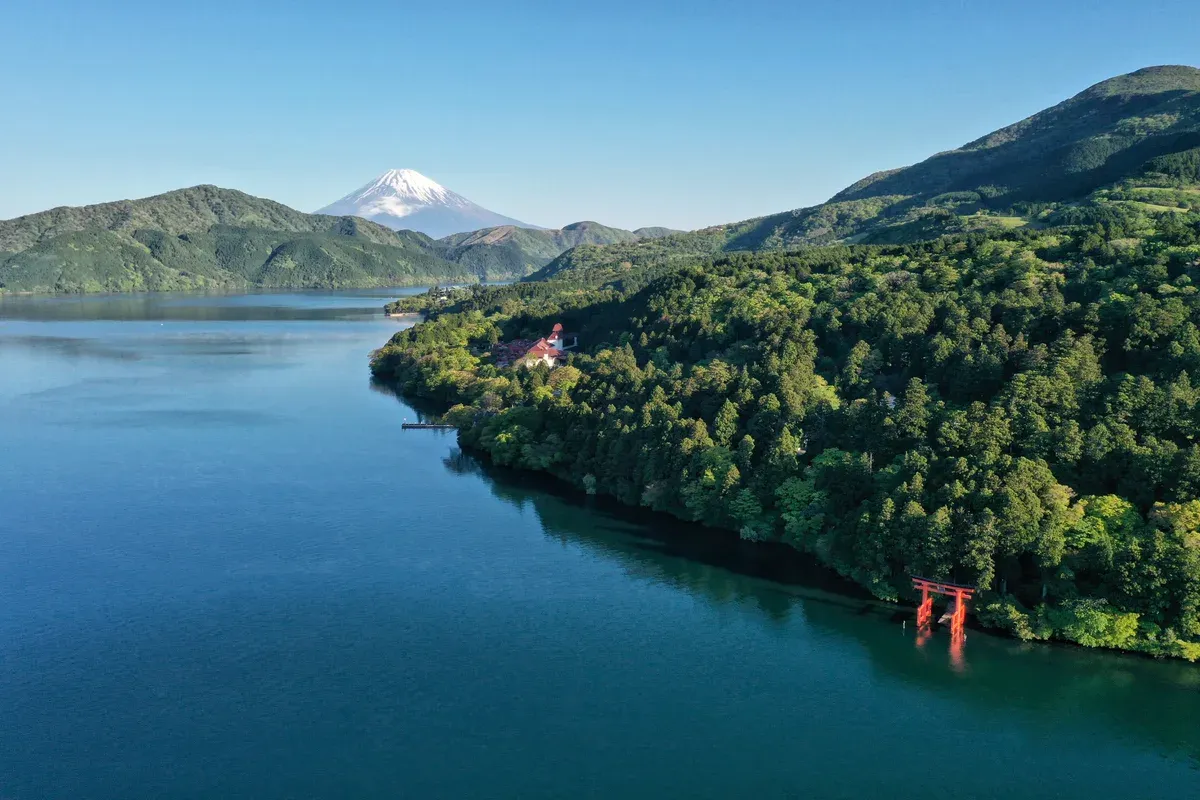
Lake Ashi with Mt Fuji behind it and the Hakone Shrine torii on the shore. Photo: Charlie fong, CC BY-SA 4.0, via Wikimedia Commons
Hakone on Your Own
The Odakyu Romancecar runs from Shinjuku to Hakone-Yumoto in about 80 minutes. All seats are reserved and the limited express surcharge is 1,200 yen for adults and 600 yen for children, on top of the regular fare. Buying on Odakyu's EMot online service saves 50 yen. The Hakone Freepass from Shinjuku costs 7,100 yen for two days or 7,500 yen for three, and it includes the Shinjuku-Odawara round trip plus the Tozan train, Tozan cable car, Hakone Ropeway, Sightseeing Cruise and designated buses. Note that the purchase date counts as day one.
The classic loop works like this: Tozan train from Hakone-Yumoto to Gora (35 minutes), cable car to Sounzan, ropeway over Owakudani to Togendai, then the cruise across Lake Ashi for 25 to 35 minutes to Hakone-machi or Moto-Hakone. Hakone Shrine is a 5 to 10 minute walk from Moto-Hakone pier.
Paid extras if you skip the pass: the ropeway is 2,000 yen one way and the cruise 1,700 yen one way. The ropeway stops in winds of 30 m/s or more and closes for scheduled maintenance, so check that morning. Substitute buses run for pass holders when a section is shut.
If planning this loop feels like too much, the Mt Fuji, Hakone Ropeway, Owakudani and Lake Ashi Day Tour from Tokyo at $76 includes a one-way ropeway fare.
| Item | Price |
|---|---|
| Hakone Freepass, 2 days from Shinjuku | 7,100 yen |
| Hakone Freepass, 3 days from Shinjuku | 7,500 yen |
| Romancecar surcharge Shinjuku-Hakone-Yumoto | 1,200 yen |
| Hakone Ropeway, one way | 2,000 yen |
| Sightseeing Cruise, one way | 1,700 yen |
| Tozan train Hakone-Yumoto-Gora, one way | Included in the Freepass |
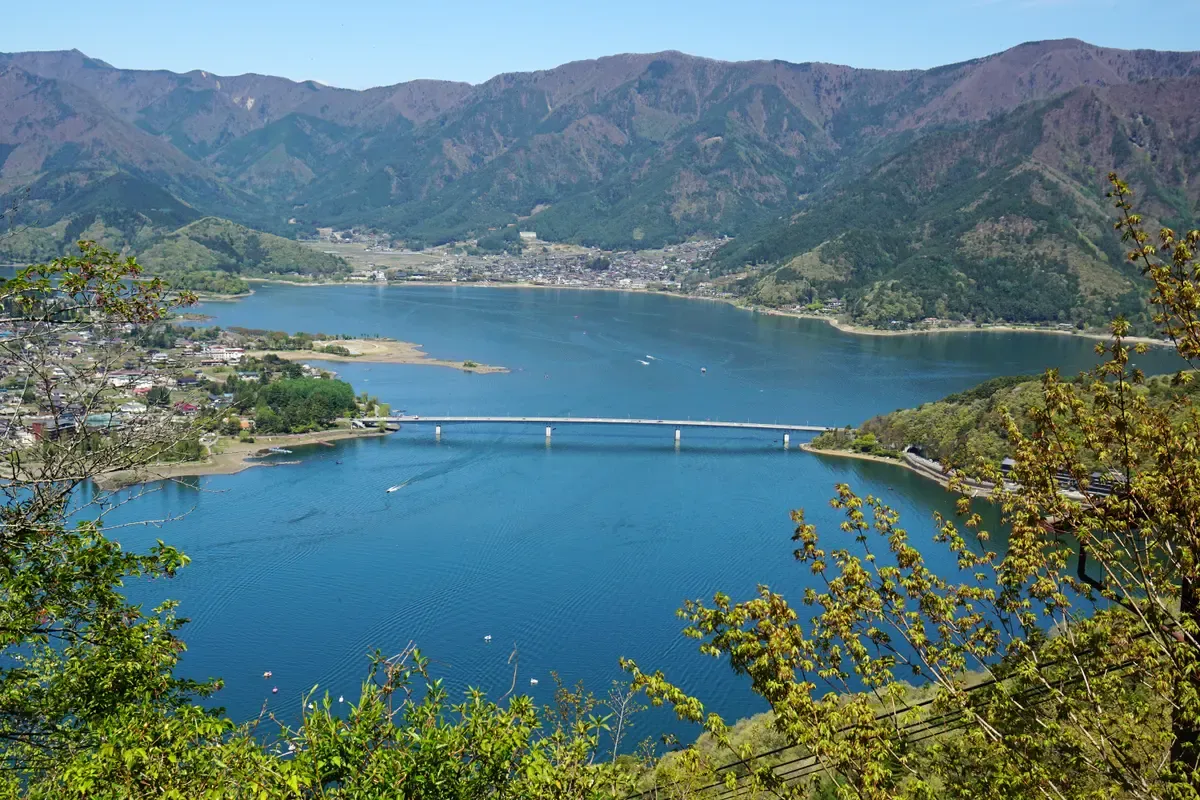
Lake Kawaguchi is the busiest of the Fuji Five Lakes. Photo: 663highland, CC BY-SA 4.0, via Wikimedia Commons
Kawaguchiko and the Fuji Five Lakes on Your Own
Fujikyu's highway bus from Busta Shinjuku to Kawaguchiko Station takes about 1 hour 45 minutes and fares start at 2,200 yen, or 2,000 yen booked online. Reservations open one month before travel. By rail, the JR Chuo Line limited express from Shinjuku to Otsuki takes 70 minutes for 2,430 yen, then the Fujikyu Railway to Kawaguchiko takes 55 minutes for 1,170 yen. A direct limited express between Shinjuku and Kawaguchiko takes about two hours, runs a few times a day and needs a seat reservation. The JR Tokyo Wide Pass at 16,000 yen for three days covers the whole Tokyo-Kawaguchiko journey except panorama seats.
Chureito Pagoda is free and sits nearly 400 steps above Arakura Sengen Shrine. Shimo-Yoshida Station is 10 minutes and 310 yen from Kawaguchiko, then a ten minute walk to the shrine and five more to the pagoda. Plan 30 to 45 minutes there, more when the viewing deck has a queue.
Around the lake, the red loop bus runs every 15 minutes and the green Saiko line every 30 minutes. The Saiko Motosuko bus pass costs 1,500 yen for one day. The Mt Fuji Panoramic Ropeway costs 1,000 yen round trip and departs every 5 to 10 minutes, with 15 minutes by bus from Kawaguchiko Station. The bus to the Fuji Subaru Line 5th Station takes 50 minutes for 2,000 yen one way.
Prefer a coach that links the viewpoints for you? The Mt Fuji, Chureito Pagoda, Lake Kawaguchi and Oshino Hakkai Day Tour from Tokyo costs $82.
| Option | Time | Price |
|---|---|---|
| Fujikyu highway bus from Busta Shinjuku | about 1 h 45 min | from 2,200 yen |
| JR limited express Shinjuku-Otsuki | 70 min | 2,430 yen |
| Fujikyu Railway Otsuki-Kawaguchiko | 55 min | 1,170 yen |
| Fujikyu Railway Kawaguchiko-Shimo-Yoshida | 10 min | 310 yen |
| Saiko Motosuko bus pass, 1 day | - | 1,500 yen |
| Panoramic Ropeway, round trip | - | 1,000 yen |
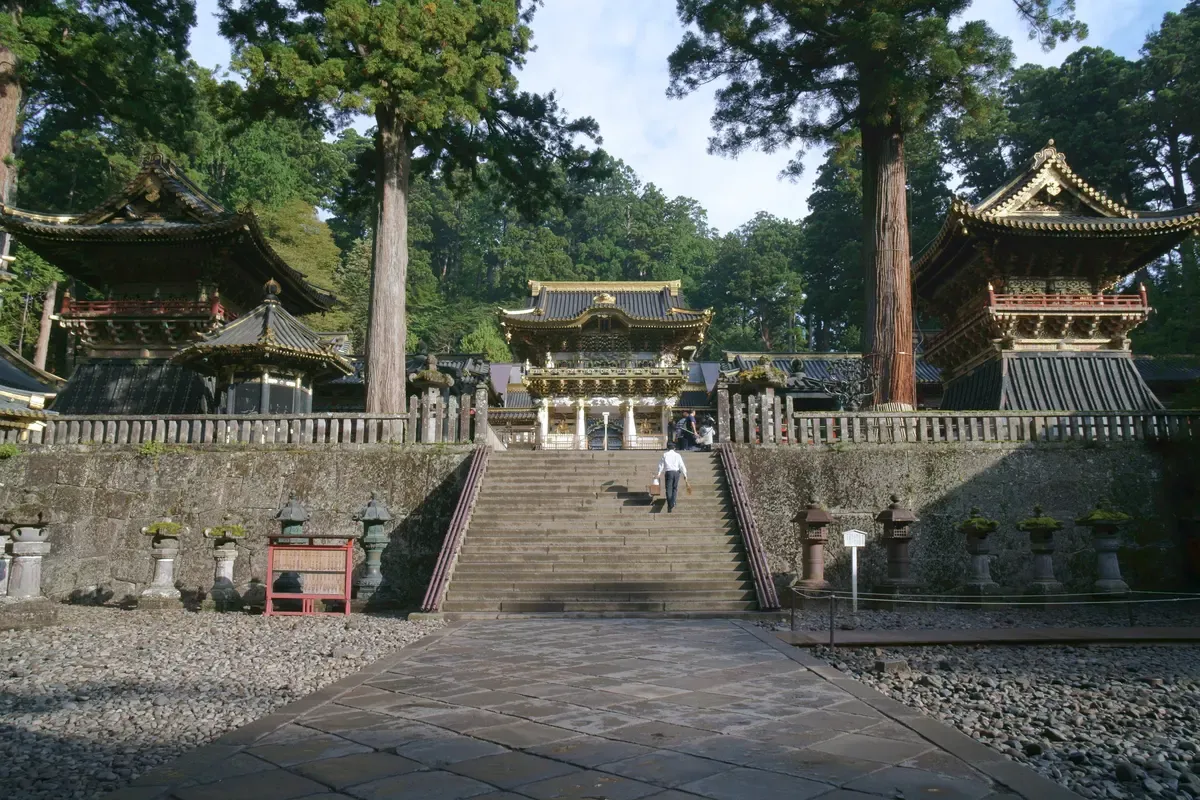
The steps up to the Yomeimon gate of Nikko Toshogu. Photo: Koichi Sato, CC BY-SA 4.0, via Wikimedia Commons
Nikko on Your Own
Tobu limited express trains from Asakusa to Tobu-Nikko take about 2 hours and cost 2,850 to 3,540 yen one way depending on train and season. The earliest Spacia X leaves Asakusa at 7:50 and arrives at 9:39. Cheaper but slower: express and local trains cost 1,400 yen and take over 2.5 hours with transfers. The JR route via the Tohoku Shinkansen to Utsunomiya and the Nikko Line takes about 2 hours for about 5,500 yen and is covered by the Japan Rail Pass.
The NIKKO PASS World Heritage Area costs 3,000 yen for adults and 1,500 yen for children, valid two consecutive calendar days, and includes one Asakusa-Nikko round trip by express or local train. A limited express needs a separate 1,450 to 2,140 yen supplement each way. Both passes are sold only to non-Japanese passport holders and neither covers shrine entry fees.
From the stations, the bus to the shrines takes about 10 minutes for 350 yen one way or 600 yen for a day pass. Toshogu admission is 1,600 yen for adults, open 9:00 to 17:00 from April to October with last entry 30 minutes before closing, and it has no closing days. Smaller fees: Shinkyo Bridge costs 300 yen and the Rinno-ji Sanbutsudo 400 yen.
If the train times put you off, the Nikko Toshogu Shrine and Kegon Waterfall Day Tour from Tokyo at $110 includes the Toshogu ticket.
| Item | Price |
|---|---|
| Tobu limited express Asakusa-Tobu-Nikko, one way | 2,850 to 3,540 yen |
| Tobu express or local, one way | 1,400 yen |
| NIKKO PASS World Heritage Area, 2 days | 3,000 yen |
| Nikko bus day pass | 600 yen |
| Toshogu admission, adult | 1,600 yen |
| Shinkyo Bridge, adult | 300 yen |
How to Plan a Free Day Trip from Tokyo
Seven steps cover most DIY day trips from Tokyo by train, from picking the destination to catching the last train home.
The Planning Steps
Each step below exists because of how the fares and timetables actually work. Follow them in order and the day usually runs itself.
1. Pick by travel time. Kamakura is just under an hour from Tokyo Station for 1,040 yen, while Hakone, Kawaguchiko and Nikko all sit near two hours each way. Match the destination to the daylight you have.
2. Check whether a pass beats single tickets. The Enoshima-Kamakura Freepass costs 1,640 yen from Shinjuku and covers the round trip plus unlimited Enoden rides, where a single Enoden ride alone is 260 yen. Do the same arithmetic for Hakone, Nikko and Kawagoe before you buy anything.
3. Reserve the limited express seat early. The Romancecar to Hakone-Yumoto has all reserved seats and adds a 1,200 yen surcharge, and the direct Shinjuku-Kawaguchiko limited express requires a reservation and runs only a few times a day.
4. Start early. Toshogu closes at 17:00 from April to October with last entry 30 minutes before, and the earliest Spacia X from Asakusa leaves at 7:50 to get you there by 9:39.
5. Check the ropeway or weather that morning. The Hakone Ropeway stops in winds of 30 m/s or more and for maintenance, and the cruise can be suspended in heavy fog or strong wind. Chureito needs clear weather for the view.
6. Carry cash. Small sights and buses do not all take cards, and many highway buses do not accept IC cards at all.
7. Check the last train back. The day gets long fast when the outbound leg is two hours, so confirm the return departure before you settle in at the far end.
- Pick by travel time: about 1 hour to Kamakura, about 2 hours to Hakone, Kawaguchiko or Nikko.
- Compare a pass against single tickets before buying.
- Reserve limited express seats: Romancecar surcharge 1,200 yen, all seats reserved.
- Start early: the first Spacia X leaves Asakusa at 7:50.
- Check the ropeway and weather that morning: winds of 30 m/s or more stop the Hakone Ropeway.
- Carry cash: many highway buses take no IC card.
- Confirm the last train home before the day starts.
The Passes Compared
The table below lines up the passes that matter for do-it-yourself day trips from Tokyo. Figures come from the Odakyu, Tobu and JR East pass pages. The Tokyo Wide Pass runs for three consecutive days.
| Pass | Price | Covers | Best for |
|---|---|---|---|
| Enoshima-Kamakura Freepass | 1,640 yen adult, 430 yen child | One Odakyu round trip Shinjuku-Fujisawa, unlimited Enoden, unlimited Odakyu Fujisawa-Enoshima | One day in Kamakura and Enoshima from Shinjuku |
| Hakone Freepass | 7,100 yen adult 2 days, 7,500 yen 3 days | Shinjuku-Odawara round trip, Tozan train, cable car, ropeway, cruise, designated buses | The full Hakone loop over one or two days |
| NIKKO PASS World Heritage Area | 3,000 yen adult, 1,500 yen child | Two calendar days, one Asakusa-Nikko round trip by express or local train | A two-day Nikko trip focused on the shrines |
| Kawagoe Discount Pass | 710 yen round trip from Ikebukuro, 1,050 yen Premium with buses | Tobu Tojo round trip Ikebukuro-Kawagoe, buses on the Premium version | A cheap Kawagoe day from Ikebukuro, foreign tourists only |
| JR Tokyo Wide Pass | 16,000 yen for 3 consecutive days | JR trains and selected non-JR lines in Kanto, including the whole Tokyo-Kawaguchiko journey | Three days of longer JR trips, non-Japanese passports only |
Do and Don't on a Free Day Trip from Tokyo
Do
- Do buy the Enoshima-Kamakura Freepass at 1,640 yen if you start from Shinjuku, because a single Enoden ride already costs 260 yen and the pass throws in the Shinjuku round trip.
- Do book the Fujikyu highway bus online, because the fare drops from 2,200 yen to 2,000 yen and reservations open one month ahead.
- Do plan 30 to 45 minutes at Chureito Pagoda, because the nearly 400 steps take effort and peak seasons bring a queue at the viewing deck.
- Do check the Hakone Ropeway status before you leave Tokyo, because winds of 30 m/s or more and maintenance stop it and the cruise can be suspended in heavy fog.
- Do carry some cash for the Nikko bus at 350 yen and small fees like the 300 yen Shinkyo Bridge, because many highway buses take no IC card at all.
Don't
- Don't assume the NIKKO PASS covers the shrines, because the passes include transport only and Toshogu admission is 1,600 yen on top.
- Don't buy a Romancecar ticket on the day without checking, because all seats are reserved and the 1,200 yen surcharge is separate from the base fare.
- Don't count the Hakone Freepass days wrong, because the date of purchase counts as day one, so a 2-day pass ends after the last train on the following day.
- Don't rely on an IC card everywhere, because on limited express trains it pays only the base fare with the supplement bought separately, and some highway buses reject cards.
When a Tour Is the Better Deal
If You want Mt Fuji and Hakone in one day without juggling six different tickets.
A coach tour does the connections for you. The Mt Fuji and Hakone Day Tour from Tokyo, Return by Bullet Train costs $159.54 and includes the ropeway, the Lake Ashi cruise and the bullet train back, while the Mt Fuji, Hakone Ropeway, Owakudani and Lake Ashi Day Tour from Tokyo is $76 with a one-way ropeway fare.
If You want the Fuji Five Lakes viewpoints covered in order, with no bus timetables to read.
Two coach options link the stops: the Mt Fuji, Chureito Pagoda, Lake Kawaguchi and Oshino Hakkai Day Tour from Tokyo at $82, or the Mount Fuji Full-Day Sightseeing Tour from Tokyo with English-Speaking Guide at $54 with fees and taxes included.
If You want Kegon Falls and Lake Chuzenji added to Nikko, which is a long bus ride on your own.
The Nikko Toshogu Shrine and Kegon Waterfall Day Tour from Tokyo at $110 includes the Toshogu ticket and takes the coach to the falls for you.
If You want Kyoto in a day and would rather not navigate the Shinkansen and the city buses alone.
The Kyoto 1-Day English-Guided Tour from Tokyo by Bullet Train costs $443.95 and includes the round-trip bullet train, lunch and an afternoon sightseeing tour. It is not a cheap day out, but nothing is left to plan.
If You travel with a family or a small group and want hotel pickup.
The Mt Fuji Full-Day Private Customizable Tour from Tokyo with Hotel Pickup costs $367 for a private group of up to 6, with the car, tolls and parking included and entrance tickets paid separately.
Free Day Trips from Tokyo: Questions
Are day trips from Tokyo by train really free?
The tour fee is zero and some sights cost nothing: the Tsurugaoka Hachimangu grounds, Chureito Pagoda and the Mount Takao trails are free to enter. You still pay transport, from 1,040 yen each way to Kamakura up to 2,850 to 3,540 yen for the Tobu limited express to Nikko.
Can I do a day trip from Tokyo without a tour?
Yes, every place in this guide works independently. Trains and highway buses cover the whole route: the Romancecar reaches Hakone-Yumoto in about 80 minutes, the Fujikyu bus reaches Kawaguchiko in about 1 hour 45 minutes, and the Spacia X reaches Tobu-Nikko by 9:39 on its 7:50 departure. The planning a day trip from Tokyo page covers stations, Suica and luggage.
Which pass should I buy for a cheap day trip from Tokyo?
Match the pass to the place: the Enoshima-Kamakura Freepass at 1,640 yen for Kamakura and Enoshima, the Hakone Freepass at 7,100 yen for two days in Hakone, the NIKKO PASS World Heritage Area at 3,000 yen for Nikko, and the Kawagoe Discount Pass at 710 yen round trip for Kawagoe. The full comparison is in the free day trips by train section.
How far is a 2-hour day trip from Tokyo?
Hakone, Kawaguchiko and Nikko all sit at about the two-hour mark: the Romancecar takes about 80 minutes to Hakone-Yumoto, the Tobu limited express about 2 hours from Asakusa to Tobu-Nikko, and the JR route to Nikko about 2 hours via Utsunomiya. For places closer to the hour mark, the free day trips from Tokyo guide's first half covers Kamakura, Yokohama, Kawagoe and Mount Takao.
Do I need a Suica or PASMO card for these trips?
An IC card speeds up the station gates, and Suica, Pasmo, Icoca and seven other cards work across each other's networks. But it does not replace everything: on limited express trains the card pays only the base fare with the supplement bought separately, and many highway buses take no IC card at all. The planning a day trip from Tokyo page explains the card options in detail.
Is it cheaper to take a tour than to travel on my own?
For one or two people doing a single destination, the cost depends on the pass: the 2-day Hakone Freepass plus Romancecar totals 8,300 yen for an adult. Tours win on convenience and on routes where connections are slow. Compare them on the day tours from Tokyo homepage before you decide.