 Day Tours from Tokyo
Onsen Day Trip from Tokyo: Where to Soak and What It Costs
An onsen day trip from Tokyo puts you in a real hot spring bath and back at your hotel the same night, without booking a ryokan. This guide compares the day-use baths in Hakone-Yumoto, at the foot of Mount Takao, in Kinugawa, Atami and Kusatsu, with bath prices, opening hours and train times from Tokyo. It also covers the etiquette rules and the tattoo situation from Japan's official tourism body, plus what to pack. For the sights around each town, see the linked trip guides. The bookable tours are compared on Tokyo day tours.
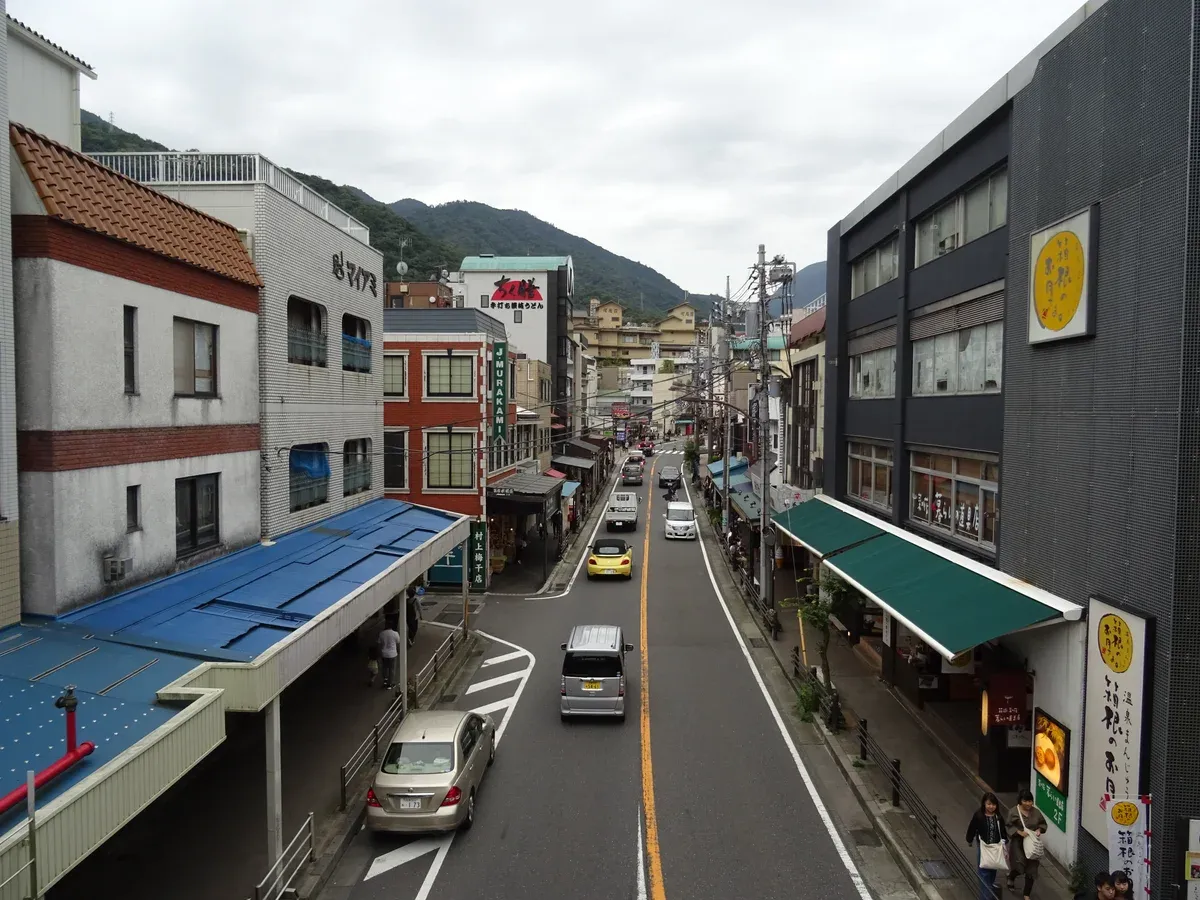
The main street of Hakone-Yumoto runs through the onsen town toward the hills. Photo: Christophe95, CC BY-SA 4.0, via Wikimedia Commons
Quick answer The short answer
The nearest onsen day trip from Tokyo is Keio Takaosan Onsen Gokurakuyu at the foot of Mount Takao, about 50 minutes from Shinjuku for 430 yen by train, with baths from 1,100 yen on weekdays. The widest choice of day-use baths is in Hakone-Yumoto, reached in about 80 minutes by Romancecar from Shinjuku, where baths run from 900 yen at Kappa Tengoku to 2,730 yen at Tenseien. One honest note first: none of the bookable day tours from Tokyo includes a hot spring bath. The Hakone tours fill the day with the ropeway, the lake cruise and the sights, and leave no soaking time.
Key takeaways
- Compare every bath in the comparison table: prices from 900 yen at Kappa Tengoku to 2,730 yen at Tenseien.
- For a hot spring plus a hike in one day, Mount Takao from Tokyo pairs a summit walk with Gokurakuyu at the foot of the mountain.
- Hakone needs more planning than a bath price. Read the Hakone Free Pass guide and the Hakone day trip guide before you go.
- If you want someone else to drive, browse the day tours from Tokyo and check each listing's inclusions, because baths are never in the price.
Onsen Day Trips from Tokyo Compared
These are the day-use baths with published prices and hours in the official and operator sources behind this page. Travel times are one way from central Tokyo.
The Day-Use Bath Table
The table puts the five Hakone-Yumoto baths next to Mount Takao and Kusatsu so you can weigh travel time against the entry fee. Gokurakuyu charges more on weekends and holidays. Hours are the published opening windows, and several baths stop admissions before closing, so check the detail in each section below.
| Onsen | From Tokyo | Bath price | Hours |
|---|---|---|---|
| Tenzan, Hakone-Yumoto | About 80 min Romancecar from Shinjuku | 1,450 yen | 9:00 to 23:00, entry until 22:00 |
| Hakone Yuryo | About 80 min Romancecar from Shinjuku | Not stated | Not stated |
| Kappa Tengoku, Hakone-Yumoto | About 80 min Romancecar from Shinjuku | 900 yen | Not stated |
| Yunosato Okada, Hakone-Yumoto | About 80 min Romancecar from Shinjuku | 1,650 yen | 11:00 to 23:00, entry until 22:00 |
| Hakone Yumoto Tenseien | About 80 min Romancecar from Shinjuku | 2,730 yen | 10:00 to 9:00 the next morning |
| Hakone Green Plaza Hotel, Sengokuhara | About 80 min to Hakone-Yumoto plus local transport | 1,600 yen | 13:00 to 18:00 weekdays |
| Keio Takaosan Onsen Gokurakuyu | About 50 min from Shinjuku, 430 yen | 1,100 yen weekday, 1,300 yen weekend | 8:00 to 22:30, last entry 21:45 |
| Sainokawara, Kusatsu | About 2.5 hours by limited express plus 30-min bus | Not stated | 7:00 to 20:00, from 9:00 December to March |
What a Tour Does and Does Not Give You
No tour in the catalog includes a bath, and this page will not pretend otherwise. The Hakone tours are sightseeing days. Mt Fuji, Hakone Ropeway, Owakudani and Lake Ashi Day Tour from Tokyo costs $76 and runs 10 hours with a one-way ropeway fare included, but lunch, the Lake Ashi cruise and any onsen are extra, and the bus can return after 8 PM. Tokyo: Mt. Fuji Cruise & Hakone Ropeway Day Trip by Bus costs $83.48, also 10 hours, and includes the ropeway and the cruise with an 80-minute lunch stop at Moto-Hakone Port. A 10-hour coached day with those stops leaves no realistic window to add a soak in Hakone-Yumoto.
If a bath is the point of your onsen day trip from Tokyo, go by train under your own steam, or accept that the tour day belongs to the ropeway and the lake.
Sources: Japan-Guide Hakone onsen, Keio Plaza Gokurakuyu, Tenseien, Visit Gunma Sainokawara, Japan-Guide Kusatsu.
The Onsen Towns
Four towns work as a bath-only day trip from Tokyo. Here is what each one offers, with the trains, prices and hours from the sources.
Hakone-Yumoto: the Biggest Choice of Day Baths
Hakone-Yumoto is the gateway town at the bottom of the Hakone valley, and it has the most day-use baths in this guide. The Odakyu Romancecar covers Shinjuku to Hakone-Yumoto in about 80 minutes with all seats reserved, on top of a separate surcharge. If you ride the Tozan train up the valley as well, note that the Hakone-Yumoto to Gora leg takes 35 minutes. Full transport costs sit on the Hakone Free Pass guide page.
For the bath itself, Kappa Tengoku is the cheapest at 900 yen and sits five minutes on foot from the station. Tenzan charges 1,450 yen and opens 9:00 to 23:00 with entry until 22:00. Yunosato Okada charges 1,650 yen and opens 11:00 to 23:00 with entry until 22:00. Hakone Yuryo has a free shuttle bus that covers the 3 minutes from Hakone-Yumoto Station. Tenseien is the premium option at 2,730 yen for adults and stays open from 10:00 to 9:00 the next morning. Hakone Yuryo bans tattoos in its shared baths, which matters if that applies to you.
Mount Takao: the Fastest Onsen Day Trip from Tokyo
Keio Takaosan Onsen Gokurakuyu sits at the foot of Mount Takao, and Keio limited express trains reach Takaosanguchi from Shinjuku in about 50 minutes for 430 yen, leaving about every 20 minutes. That makes it the quickest true hot spring you can reach for a same-day soak. The bath opens 8:00 to 22:30 daily with last admission at 21:45, and costs 1,100 yen for adults on weekdays, 1,300 yen on weekends, holidays and peak days, and 550 yen for children.
The obvious move is to hike first and soak after. Trail 1 is 3.8 km and takes about 110 minutes up and 90 down on foot, or roughly half that with the cable car or chair lift, which each cost 490 yen one way. The full mountain plan, the seasons and the trails are on the Mount Takao from Tokyo page. Bring a change of clothes, because the bath is at the foot of the mountain and you will ride back to Shinjuku clean.
Kinugawa: a Bath on the Nikko Side
Kinugawa Onsen is a hot spring resort about 30 minutes from Nikko by train, with the Shimo-Imaichi to Kinugawa Onsen ride taking 25 minutes for 270 yen. From Tokyo, Tobu limited express trains from Asakusa take about two hours and cost 3,040 to 3,730 yen one way. Express and local trains cost 1,590 yen but take at least 30 minutes longer with 1 to 3 changes.
Prices and hours for individual Kinugawa day-use baths are not printed here. Ask at the Kinugawa Onsen tourist office on arrival, or treat Kinugawa as the warm-up for the Nikko day trip from Tokyo and its shrine complex.
Atami: the Sea-side Hot Spring Town
Atami is a hot spring city on the coast, and the fastest way there is the Shinkansen from Tokyo in 40 to 50 minutes for around 4,000 yen. The Odoriko limited express takes about 1 hour 20 minutes for around 3,500 yen, and local JR Tokaido trains take about 100 minutes for 1,980 yen, which is the budget option. The wider region, including Jogasaki Coast and Kawazu, is covered on the Izu Peninsula from Tokyo page.
As with Kinugawa, this guide does not quote a price or hours for an Atami bath. Atami's sights include Atami Castle at 1,000 yen and the MOA Museum of Art at 1,600 yen, closed Thursdays, and Kinomiya Shrine is free and open 24 hours if you want a stroll between trains.
Kusatsu: Worth It If You Start Early
Kusatsu is a well-known hot spring town, and it can be done in a long day, but the transport is the constraint. The Kusatsu-Shima limited express runs from Ueno to Naganohara-Kusatsuguchi in about 2.5 hours for 5,480 yen, followed by a 30-minute JR bus for 780 yen, and only about three round trips a day run on that line. The highway bus from Busta Shinjuku takes about 4 hours and costs 3,500 to 4,000 yen.
The reward is the Sainokawara open-air bath, open 7:00 to 20:00, from 9:00 in December to March. A long travel day for one bath only makes sense if Kusatsu itself is the goal. If you just want hot water, Hakone or Mount Takao will cost you far less time.
Top 5 Onsen Hot Springs Near Tokyo
Five hot spring towns within reach of Tokyo for a day. Third-party video by The Onsen Guy. This site did not shoot it and has no relationship with the creator.
Onsen Rules and Tattoos
These rules come from the official Japan National Tourism Organization guidance on onsen bathing, and they apply at every bath in this guide.
Before You Enter the Water
Wash thoroughly at the seated shower booths before entering the bath. Keep the small towel out of the water entirely. Tie long hair up so it does not enter the water. Swimsuits are not allowed in most traditional onsen, so you bathe nude.
Avoid alcohol before bathing, and take no food or drink into the bath area. A stay of about 30 minutes is typical, and there is no prize for lasting longer. If you feel lightheaded, get out and cool down at the showers.
Tattoos: No Legal Ban, Facility by Facility
There is no legal ban on tattoos at onsen in Japan. Each facility sets its own rule, and they differ. Within this guide's list, Hakone Yuryo is confirmed to ban tattoos in its shared baths.
The JNTO guidance lists three workarounds if you have ink: cover seals for small tattoos, booking a private kashikiri bath where one is offered, and asking the facility ahead of time. Not every day-use bath in Hakone-Yumoto offers a private bath option, and it is not confirmed which do, so email or ask at the door rather than assume. Tattoo policies for Tenzan, Yunosato Okada and Kappa Tengoku are not confirmed here, which is not the same as permission.
What to Bring
Most day-use baths rent or sell towels, and you can rely on that only where it is stated. Hakone Yuryo sells towels for 250 to 450 yen, which tells you the safest plan: bring your own small towel and a change of clothes. Entry fees run from 900 to 2,730 yen.
If you are combining the bath with a hike at Mount Takao or sightseeing, a coin locker at the station handles your bag, with small lockers typically costing 400 to 500 yen per calendar day.
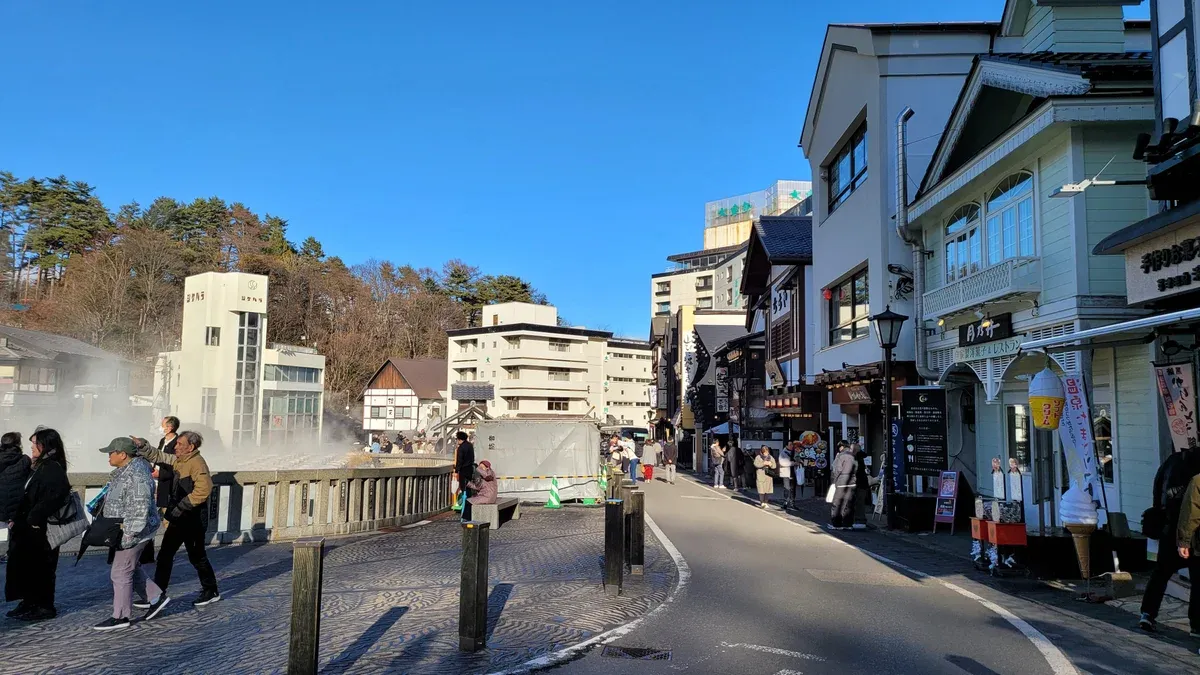
Steam rises from the Yubatake hot spring channels in the center of Kusatsu. Photo: Aspere, CC0, via Wikimedia Commons
Onsen Day Trip Questions
Can you do an onsen as a day trip from Tokyo without staying overnight?
Yes, and it is the normal way to do it. Every bath in this guide sells day-use entry, from 900 yen at Kappa Tengoku to 2,730 yen at Tenseien in Hakone-Yumoto, and the closest, Gokurakuyu at Mount Takao, is only about 50 minutes from Shinjuku for 430 yen. Overnight stays with meals belong to the 2 day trip from Tokyo guide instead.
Do any Tokyo day tours include an onsen bath?
No. None of the catalog tours includes a bath. The Hakone options, Mt Fuji, Hakone Ropeway, Owakudani and Lake Ashi Day Tour from Tokyo at $76 and Tokyo: Mt. Fuji Cruise & Hakone Ropeway Day Trip by Bus at $83.48, spend their 10 hours on the ropeway, the lake cruise and the sights, so they leave no soaking time. To bathe, go by train and pick a day-use bath yourself.
Are tattoos allowed at onsen near Tokyo?
It depends on the facility, because there is no legal ban and each onsen sets its own rule per the official JNTO guidance. Hakone Yuryo in Hakone-Yumoto bans tattoos in its shared baths. Workarounds are cover seals for small tattoos, a private kashikiri bath, or asking the facility ahead. For more Kanto planning, see the day trips from Tokyo guide.
What is the cheapest onsen day trip from Tokyo?
By total spend, Mount Takao wins: about 430 yen each way on the Keio line plus 1,100 yen for Gokurakuyu on weekdays, and you can add a 490 yen cable car ride if you hike. In Hakone-Yumoto the cheapest bath is Kappa Tengoku at 900 yen, five minutes on foot from the station. Getting there costs more, since the Romancecar needs a separate surcharge on top of the fare. The free day trips from Tokyo hub covers the no-ticket alternatives.
Is a Hakone onsen day trip worth it compared with a full Hakone sightseeing day?
They are different days. A Hakone bath day means riding to Hakone-Yumoto, soaking at Tenzan or Yuryo, and heading back, which fits easily inside the Romancecar's 80-minute run from Shinjuku. A full Hakone sightseeing day uses the Hakone Free Pass for the ropeway, cruise and Tozan train and does not leave time for a bath. If you want both, split them across two days or accept that the sightseeing circuit fills the day.