 Day Tours from Tokyo
How to Plan a Day Trip from Tokyo: Stations, Passes and Timing
How to plan a day trip from Tokyo comes down to four decisions: which station to leave from, which ticket or pass to use, when to go, and what to carry. Most trips take one to three hours by train or bus, and fares start from a few hundred yen on the nearest lines. This guide covers the stations, the IC cards and passes, the hours and weather rules that decide your day, and how meeting points work if you book a tour instead. The destination-by-destination routes live on the free day trips from Tokyo page. The bookable tours are compared on day tours from Tokyo.
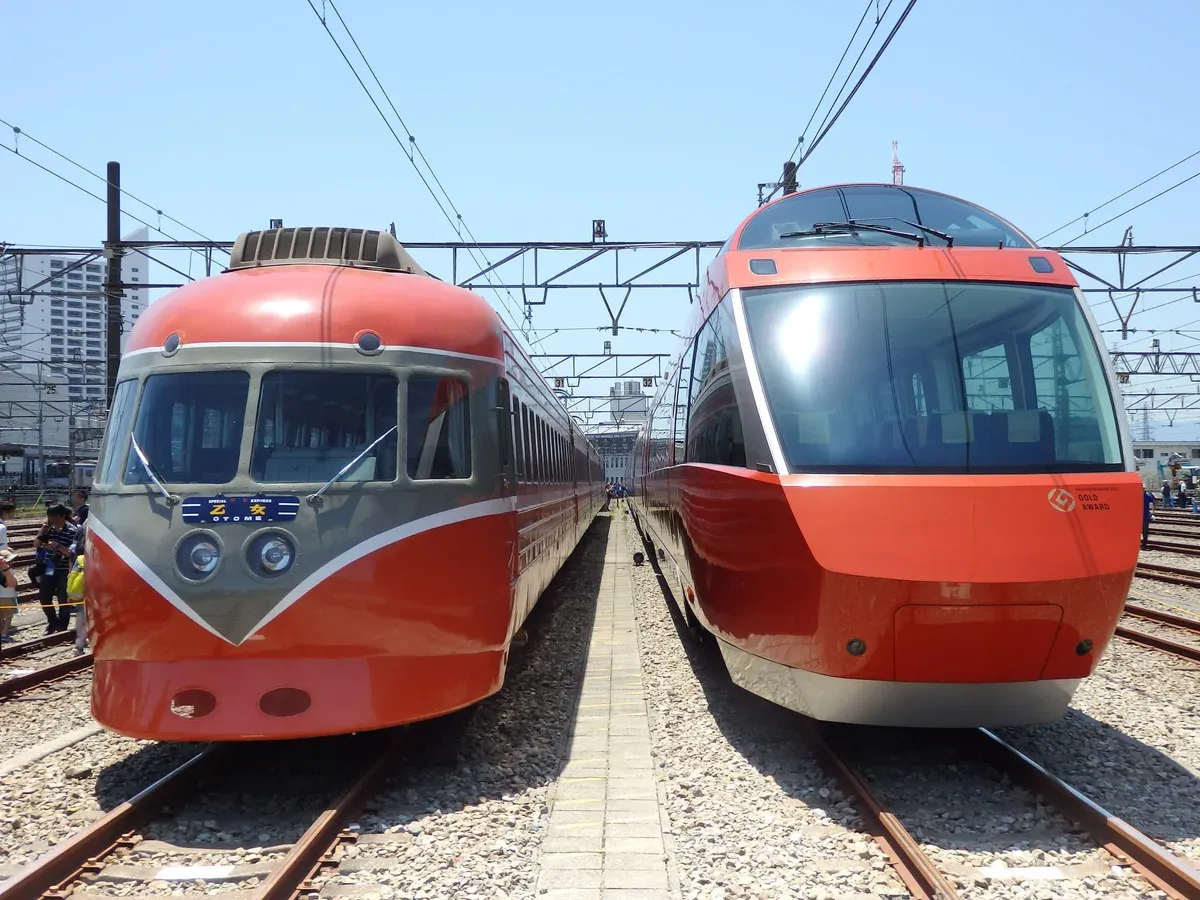
Two generations of Odakyu Romancecar limited express trains stand side by side. Photo: Cassiopeia sweet, Public domain, via Wikimedia Commons
Quick answer Plan it in four steps
Planning a day trip from Tokyo starts with the station: Tokyo Station for JR and the Shinkansen, Shinjuku for Odakyu, Keio and highway buses, Asakusa for Tobu to Nikko, Ikebukuro for Kawagoe and Chichibu. A Suica or PASMO card covers the base fare on almost every line, and limited express trains need a separate supplement. If you plan three consecutive JR days, the JR Tokyo Wide Pass at 16,000 yen for three days covers the whole Tokyo-Kawaguchiko trip. Start early, travel on weekdays, and check mountain ropeways that morning because wind stops them.
Key takeaways
- Match the station to the trip with the station table below.
- Compare the JR Tokyo Wide Pass at 16,000 yen against single tickets before you buy.
- See what the day tours from Tokyo shows before deciding between a tour and the train.
- Keep the timing rules in mind, from Toshogu hours to Fuji clouds.
Which Tokyo Station for Which Day Trip
The biggest planning mistake is going to the wrong station. Tokyo has several departure hubs and each one serves a different set of day trips.
The Five Departure Hubs
Tokyo Station handles the JR network and the Shinkansen, so it is the hub for Kamakura by the Yokosuka Line in just under an hour for 1,040 yen, for Karuizawa by Shinkansen in 65 to 80 minutes for about 6,000 yen, and for Kyoto by the Tokaido Shinkansen. Shinjuku serves the Odakyu Romancecar to Hakone-Yumoto in about 80 minutes, the Keio line to Mount Takao in about 50 minutes for 430 yen, and Busta Shinjuku, the highway bus terminal, where the Fujikyu bus to Kawaguchiko takes about 1 hour 45 minutes with fares from 2,200 yen, or 2,000 yen booked online. Asakusa is the Tobu terminal for Nikko limited express trains taking about 2 hours at 2,850 to 3,540 yen one way. Ikebukuro runs the Tobu Tojo Line express to Kawagoe in 30 minutes for 490 yen and Seibu trains to Chichibu. Shibuya is the practical hub for Yokohama, which sits about 20 to 30 minutes from Tokyo Station, Shinagawa, Shibuya and Shinjuku.
For the full route-by-route detail, the free day trips from Tokyo guide covers each destination in turn. Longer versions of the same trips belong on the 2 day trip from Tokyo and 3 day trip from Tokyo pages.
| Station | Line | Day trips |
|---|---|---|
| Tokyo Station | JR Yokosuka Line, Tohoku and Tokaido Shinkansen | Kamakura (under 1 hour, 1,040 yen), Karuizawa (65-80 min), Kyoto by bullet train, Nikko via Utsunomiya (about 2 hours, about 5,500 yen) |
| Shinjuku | Odakyu, Keio, JR Shonan-Shinjuku and Chuo, Busta Shinjuku buses | Hakone (Romancecar about 80 min), Mount Takao (about 50 min, 430 yen), Kawaguchiko bus (about 1 h 45 min, from 2,200 yen), Kamakura (about 1 hour, 1,040 yen), Kawagoe (JR, 55 min, 810 yen) |
| Asakusa | Tobu | Nikko (limited express about 2 hours, 2,850-3,540 yen) and Kinugawa Onsen (about 2 hours, 3,040-3,730 yen) |
| Ikebukuro | Tobu Tojo Line, Seibu | Kawagoe (express 30 min, 490 yen), Chichibu (Seibu limited express, 900 yen supplement) |
| Shibuya | Tokyu Toyoko Line | Yokohama (about 20-30 min from central Tokyo stations) |
Sources: Fujikyu highway buses, Odakyu passes
Tickets, IC Cards and Passes
Three layers decide the cost: the IC card for base fares, supplements for reserved seats, and regional passes when you repeat a route. The figures below come from the pass issuers and japan-guide.
Suica and PASMO First
An IC card is the default for a day trip by train. Suica, Pasmo, Icoca and seven other IC cards work across each other's networks, so one card covers JR and the big private railways. On limited express trains an IC card pays only the base fare and you buy the supplement separately, so carry cash or a credit card for that.
On JR East Shinkansen an IC card works only for non-reserved seats after a one-time setup, and many highway buses do not accept IC cards at all, which is why cash still matters. Sales of unnamed Suica and PASMO cards have resumed after a long suspension. A normal Suica needs a 500 yen deposit plus about 1,500 yen of value, and refunding unused credit costs 220 yen at most companies.
Welcome Suica and Tourist Pasmo need no deposit, a physical Welcome Suica expires after 28 days and the mobile version lasts 180 days. iPhone users can add Suica, Pasmo and Icoca to Apple Pay.
- Tap in and tap out with the same card, the fare is charged at the exit.
- Buy limited express supplements at a machine or ticket office before boarding.
- Keep coins and notes for buses, lockers and small temple fees.
The JR Tokyo Wide Pass
The JR Tokyo Wide Pass costs 16,000 yen for three consecutive days and is sold only to non-Japanese passport holders. It covers JR trains and selected non-JR lines in the Kanto region, including the whole Tokyo-Kawaguchiko journey except panorama seats. That makes it the cleanest pass for a Fuji day by rail.
Compare it with the single fares you would pay over those three days. The pass does not cover the Tokaido Shinkansen toward Kyoto.
The Japan Rail Pass and Where It Does Not Work
A 7-day Japan Rail Pass costs 50,000 yen ordinary online, 14 days 80,000 yen and 21 days 100,000 yen, and the 7-day Green pass costs 70,000 yen. Through an overseas agency the 7-day ordinary pass costs 53,000 yen. For day trips the pass has two well-known limits.
It is not valid between Otsuki and Kawaguchiko on the Fujikyu Railway, so a Fuji day costs a JR Pass holder a 1,170 yen supplement, or 1,770 yen on the limited express, for that section. And on the Tokaido Nozomi and Mizuho the pass holder needs a special ticket issued only to Japan Rail Pass holders, which is why Kyoto by Nozomi is a paid extra on a pass. The JR route to Nikko via the Tohoku Shinkansen and the Nikko Line, about 2 hours and about 5,500 yen, is covered.
Private-railway Passes
The private lines run their own passes. The Hakone Freepass from Shinjuku costs 7,100 yen for 2 days or 7,500 yen for 3 days and covers the Tozan train, cable car, ropeway, sightseeing cruise and designated buses, with the Shinjuku-Odawara round trip included. The Odakyu Enoshima-Kamakura Freepass is 1,640 yen for one day and covers the Shinjuku-Fujisawa round trip, unlimited Enoden rides and Fujisawa-Enoshima rides.
Tobu sells the NIKKO PASS World Heritage Area at 3,000 yen for two days and the All Area pass at 8,000 yen for four days, both sold only to non-Japanese passport holders and both excluding shrine and temple entry fees. For Kawagoe, the Tobu Kawagoe Discount Pass is 710 yen round trip from Ikebukuro, or 1,050 yen with bus rides, for foreign tourists only.
| Ticket | Price | Covers | Good for |
|---|---|---|---|
| JR Tokyo Wide Pass | 16,000 yen, 3 days | JR and selected non-JR lines in Kanto, the whole Tokyo-Kawaguchiko trip | Three consecutive days of Kanto JR trips |
| Japan Rail Pass, 7-day ordinary | 50,000 yen online | Most JR trains, Nikko via Utsunomiya, not Otsuki-Kawaguchiko, Nozomi needs a special ticket | Travelers touring Japan beyond Tokyo |
| Hakone Freepass from Shinjuku | 7,100 yen (2 days) or 7,500 yen (3 days) | Round trip to Odawara, Tozan train, cable car, ropeway, cruise, designated buses | A Hakone day or two |
| Enoshima-Kamakura Freepass | 1,640 yen, 1 day | Odakyu Shinjuku-Fujisawa round trip, unlimited Enoden, Fujisawa-Enoshima | A Kamakura and Enoshima day |
| NIKKO PASS World Heritage Area | 3,000 yen, 2 days | Asakusa-Nikko round trip by express or local train, not shrine entry fees | A Nikko shrine day |
| Tobu Kawagoe Discount Pass | 710 yen round trip | Ikebukuro-Kawagoe round trip, 1,050 yen version adds buses | A Kawagoe day |
Japan's Limited Express Trains Explained! How to Buy Tickets & Ride
How limited express seats and supplements work on the trains used for day trips. Third-party video by Kensho Quest. This site did not shoot it and has no relationship with the creator.
Timing: Hours, Weather and Crowds
A day trip lives or dies on opening hours and weather.
The Rules That Shape Your Day
Nikko's Toshogu closes earliest in winter and stops entry 30 minutes before closing, which makes a late Asakusa departure risky in the cold months. The Hakone Ropeway stops in winds of 30 m/s or more, in extreme weather, for mechanical trouble and for annual maintenance, and sections were closed for scheduled work with substitute buses running roughly every 15 minutes, so check the ropeway status the morning you go. Mt Fuji views are better in the early morning or late afternoon and in the colder months, and the mountain shows on over 120 days a year from central Tokyo.
Hakone has lower odds of a clear Fuji view than the Fuji Five Lakes because it needs clear skies in two places at once.
| What | Rule | Why it matters |
|---|---|---|
| Toshogu hours | 9:00-17:00 April to October, 9:00-16:00 November to March, last entry 30 minutes before closing | A winter departure from Asakusa after mid-morning squeezes the shrine visit |
| Hakone Ropeway | Stops at winds of 30 m/s or more, extreme weather, mechanical trouble, maintenance | Check the status that morning and have a bus plan |
| Mt Fuji visibility | Best early morning or late afternoon, better in colder months, over 120 visible days a year from Tokyo | An early start raises your odds of seeing the mountain |
| Rainy season | Hits most of Japan in June, Hakone is described as attractive in that weather | June trips need indoor options, Hakone copes well |
| Typhoon season | Peaks in August and September, September stays hot and humid | Build a wet-weather backup in late summer |
| Kawaguchiko bus | Reservations open one month before travel and close 10 minutes before the first departure | Book the Busta Shinjuku bus up to a month out in peak season |
| Chureito Pagoda | Free, nearly 400 steps up, plan 30 to 45 minutes, more with a queue | The steps and the queue decide your pacing |
Crowds and Daylight
Weekends and Japanese holidays are the busy days everywhere. Mount Takao gets crowded on weekends, especially in November. Golden Week runs from 29 April with holidays on 3 to 5 May, and those days fill trains and buses.
Daylight is the quiet constraint: Tokyo has about 14.5 hours of daylight around the summer solstice with sunset near 19:00, and about 9 hours 45 minutes in late December with sunset near 16:32. A Nikko or Hakone winter day needs an early train because the sights close by 16:00 to 17:00 and it is dark soon after. Go on a weekday when you can, start before 8:00 for mountain trips, and keep the flexible options of a tour, such as Mt Fuji, Chureito Pagoda, Lake Kawaguchi and Oshino Hakkai Day Tour from Tokyo at $82, in reserve if you would rather not manage the connections yourself.
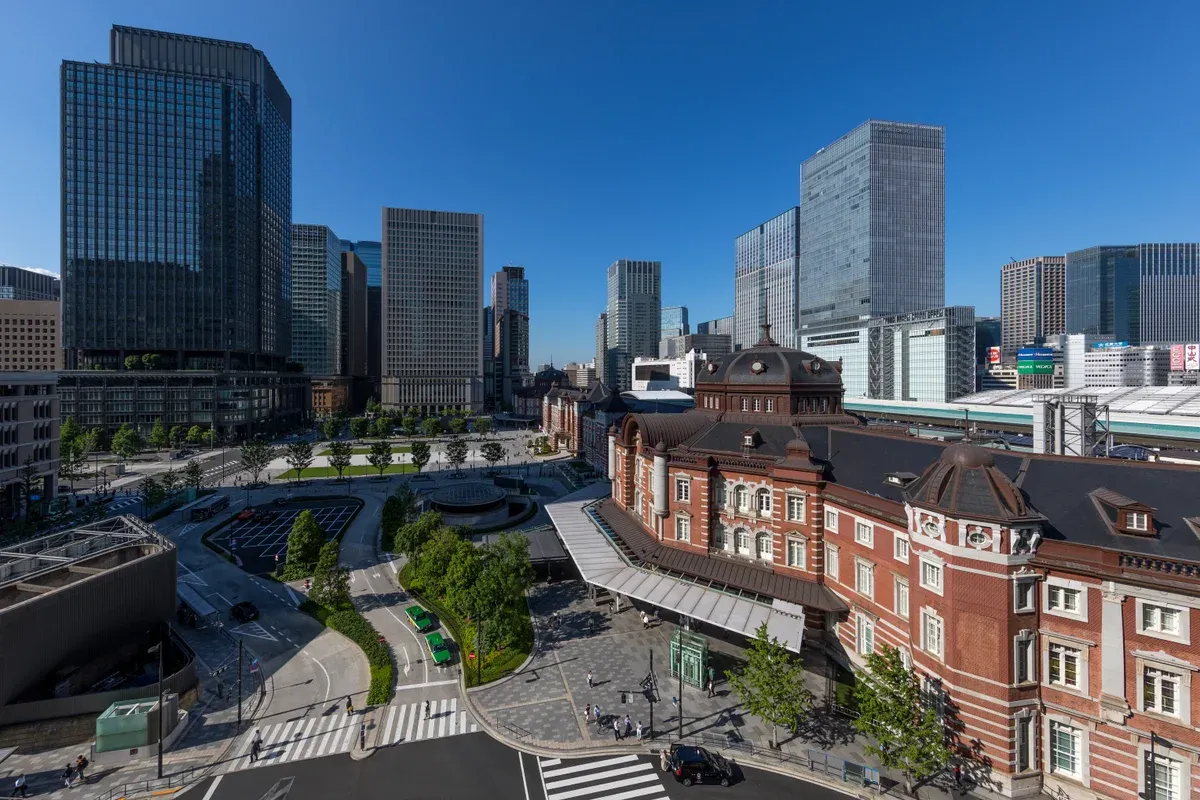
The red-brick Marunouchi building of Tokyo Station stands among glass towers. Photo: Basile Morin, CC BY-SA 4.0, via Wikimedia Commons
What to Bring and What to Leave
Day trip packing is about cash, cards and luggage size. The rules below come from the rail operators and the tour listings.
Cash, Card and Backups
Bring cash even in a card-friendly city. Many highway buses do not accept IC cards at all, the tour listings for Nikko and Mt Fuji warn that credit cards may not be accepted everywhere and tell you to bring cash for food, and temple entry fees run from 300 yen at Kotoku-in to 1,600 yen at Toshogu. Keep your IC card charged, since an IC card covers the base fare on trains and you pay the supplement separately on limited express services.
A charged phone handles the Apple Pay Suica fallback and the bus bookings that close 10 minutes before the first departure.
Luggage Rules and Lockers
Trains accept up to two pieces of luggage with a combined size of 250 cm and no side over 200 cm. On the Tokaido, Sanyo and Kyushu Shinkansen, bags totalling 160 to 250 cm need a free oversized baggage seat reservation, bags over 250 cm are not allowed, and travelling oversized with no reservation costs a 1,000 yen fee. The simplest plan for a day trip is to leave the big bag behind: small station coin lockers of 35 x 34 x 57 cm cost 400 to 500 yen per calendar day, medium lockers 500 to 700 yen and large 600 to 1,000 yen, fees are per calendar day, and station staff empty lockers after three days.
Luggage forwarding by Yamato or Sagawa costs around 2,000 to 2,500 yen for a suitcase if you would rather send it ahead.
Shoes, Layers and the Small Stuff
Chureito Pagoda sits nearly 400 steps above Arakura Sengen Shrine, so wear shoes that can climb, and plan 30 to 45 minutes there. Mount Takao's Trail 1 runs 3.8 km and takes 110 minutes up on foot, so the same rule applies. Bring a rain layer from June onward because the rainy season hits most of Japan that month and typhoons peak in August and September.
In winter, sunset near 16:32 leaves little daylight for Hakone and Nikko. Leave the full suitcase at the hotel or in a locker, carry water for the walking-heavy itineraries, and carry coins for shrine fees and lockers.
If You Book a Tour
Tours remove the ticket and connection work, but they have their own logistics. Here is how the meeting points and inclusions actually work.
Where and When to Meet
Most shared Fuji, Hakone, Nikko and Kamakura tours meet at Tokyo Station at the BEAMS sign inside STAND T on the first floor of the Shin-Marunouchi Building, or at Shinjuku Station at the Tokyo Mode Gakuen building. Amigo Tours Japan's Nikko trip and the Full options of its Mt Fuji, Kamakura and Lake Ashi trip instead use Ginza Inz 2 near Ginza Station Exit C9, while its Basic option meets at the Tokyo Station Marunouchi South Exit, and the Kyoto bullet train tour meets at Tokyo City i in the KITTE building at Tokyo Station Marunouchi South Exit. Arrive early: the Mt Fuji Full-Day Private Customizable Tour from Tokyo with Hotel Pickup at $367 asks you to be in the lobby at least 10 minutes before pickup, and hotel pickup is a private-tour feature only, since the shared coach listings all start at a fixed point with no hotel collection.
The meeting point usually cannot be changed on the day, so confirm your option when booking.
What the Price Includes
Read the inclusion list before paying, because it varies more than the price does. Mt Fuji and Hakone Day Tour from Tokyo, Return by Bullet Train at $159.54 includes the Hakone Ropeway fee, the Lake Ashi cruise fee and the bullet train back to Tokyo Station, with buffet lunch only if you select a lunch option and no vegan, halal, gluten-free or allergy-friendly buffet available. Mt Fuji, Hakone Ropeway, Owakudani and Lake Ashi Day Tour from Tokyo at $76 includes only a one-way ropeway fare, lunch and the Lake Ashi cruise are extra, and the bus can get back after 8 PM. Mount Fuji Full-Day Highlights Day Trip from Tokyo at $80 includes entry fees at every stop but no meals. On combination tours, check the option name: Mount Fuji, Kamakura Big Buddha and Lake Ashi Day Trip from Tokyo at $59.50 includes the Big Buddha ticket and the cruise only on the Full Tour options, not the Basic one. Lunch is extra on most listings, and options such as lunch sets, Spanish or French guides or vehicle size change the final price.
Cancellation
Every tour listed on this site carries free cancellation 24 hours ahead, which is the single best reason to book early and adjust later. If weather threatens your mountain day, book the shared coach version, watch the forecast, and cancel within the window rather than gambling on train tickets. To see which trips suit a one-day format, the day trips from Tokyo overview compares duration, price and what each tour includes.
Planning Do's and Don'ts
Do
- Do match the station to the destination before you leave, because Asakusa and Ikebukuro serve entirely different lines.
- Do buy limited express supplements in advance, since a Suica or PASMO card covers only the base fare and the Romancecar surcharge from Shinjuku to Hakone-Yumoto is 1,200 yen for adults.
- Do start mountain trips before 8:00, because Mt Fuji views are best in the early morning and Toshogu stops entry 30 minutes before its 16:00 winter close.
- Do check the Hakone Ropeway status the morning you travel, because winds of 30 m/s or more and scheduled maintenance stop it and substitute buses run only about every 15 minutes.
- Do reserve the Kawaguchiko highway bus early in peak season, since bookings open one month before travel and close 10 minutes before the first departure.
Don't
- Don't assume the Japan Rail Pass covers every Fuji route, because it is not valid between Otsuki and Kawaguchiko and the Fujikyu section costs a JR Pass holder 1,170 yen extra.
- Don't carry a full suitcase on a mountain day, because the Shinkansen oversized rules require a free reservation for bags of 160 to 250 cm and charge 1,000 yen without one.
- Don't count on cards everywhere, because tour listings for Nikko and Mt Fuji tell you to bring cash and many highway buses take no IC card at all.
- Don't plan a long trip for a national holiday weekend if you can avoid it, because Golden Week days from 29 April to 5 May and November weekends fill the trains and the trails.
Planning a Day Trip from Tokyo: FAQ
Which station should I use for a day trip from Tokyo?
Use Tokyo Station for JR lines and the Shinkansen, Shinjuku for Odakyu, Keio and Busta Shinjuku highway buses, Asakusa for Tobu trains to Nikko, Ikebukuro for Kawagoe and Chichibu, and Shibuya for Yokohama. The full match-up is in the station table above.
Can I use a Suica card for a day trip?
Yes. Suica, Pasmo, Icoca and seven other IC cards work across each other's networks and cover the base fare, but on limited express trains you buy the supplement separately, on JR East Shinkansen an IC card works only for non-reserved seats, and many highway buses take no IC card at all. See tickets and passes.
Is the JR Tokyo Wide Pass worth it for day trips?
It costs 16,000 yen for three consecutive days, is only for non-Japanese passport holders, and covers JR and selected non-JR lines in Kanto including the whole Tokyo-Kawaguchiko journey except panorama seats. It pays off if your three days of single fares would exceed that, and it does not cover the Tokaido Shinkansen toward Kyoto.
Does the Japan Rail Pass work for a Mt Fuji day trip?
Only partway. The pass is not valid between Otsuki and Kawaguchiko, so JR Pass holders pay a 1,170 yen supplement, or 1,770 yen on the limited express, for that Fujikyu section. The JR Tokyo Wide Pass covers the whole rail journey instead.
When is the best time of day to see Mt Fuji from Tokyo?
Early morning or late afternoon gives the best odds, and the colder winter months beat summer. The mountain is visible from central Tokyo on over 120 days a year, and around Shin-Fuji on the Tokaido Shinkansen it appears on the right side from window seat E.
Do tours from Tokyo include hotel pickup and lunch?
Usually not. Shared tours meet at fixed points such as Tokyo Station STAND T, Shinjuku or Ginza, and hotel pickup is a private-tour feature, for example on the Mt Fuji Full-Day Private Customizable Tour from Tokyo with Hotel Pickup at $367 for up to 6 people. Lunch is extra on most listings unless you select a lunch option.